







Understanding Lumbar Fusion with Instrumentation
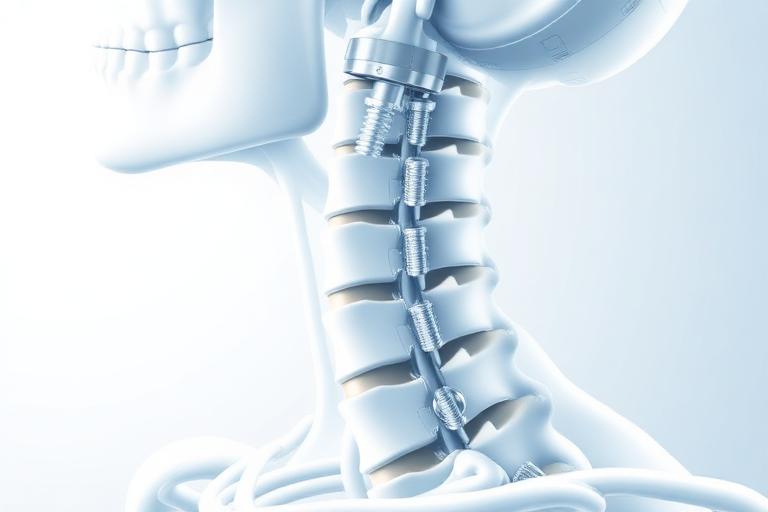
Lumbar fusion with instrumentation is a surgical procedure that permanently stabilizes one or more segments of the lower spine using pedicle screws, rods, and interbody cages. It is one of the most effective treatments for spinal instability and severe degenerative conditions.
Why Instrumentation Matters
Modern spinal instrumentation has revolutionized fusion surgery:
- Pedicle screws anchor solidly into the vertebral bone
- Titanium rods connect screws to create a rigid construct
- Interbody cages restore disc height and promote bone growth
- Bone graft fills the cage and spaces to promote biological fusion
Together, these components hold the spine stable while new bone grows and permanently fuses the vertebrae.
PLIF vs. TLIF: What's the Difference?
PLIF (Posterior Lumbar Interbody Fusion)
- Approach: Directly from the back of the spine
- Two cages placed symmetrically into the disc space
- Requires some nerve retraction
- Excellent for central stenosis with instability
- Well-established technique with decades of success
TLIF (Transforaminal Lumbar Interbody Fusion)
- Approach: From one side, through the neural foramen
- Single cage placed obliquely
- Less nerve retraction than PLIF
- Can be performed minimally invasively (MIS-TLIF)
- Currently the most popular posterior fusion technique
Which is Better?
Both achieve excellent fusion rates. Dr. Jerry Walters II selects the approach based on:
- Your specific anatomy and pathology
- Number of levels requiring treatment
- Whether minimally invasive technique is appropriate
- Previous surgical history
When is Lumbar Fusion Needed?
Common Indications
- Spondylolisthesis: One vertebra has slipped forward on another
- Degenerative disc disease with instability: Painful motion segment
- Recurrent disc herniation: After failed microdiscectomy
- Spinal stenosis with instability: Decompression alone insufficient
- Spinal fractures: Traumatic or pathologic
- Adult degenerative scoliosis: Curvature correction
Multilevel Fusion
Many patients require fusion at two or more levels. Common multilevel constructs include:
- L4-L5-S1 (two-level)
- L3-L4-L5 (two-level)
- L3-L4-L5-S1 (three-level)
Modern instrumentation allows safe and effective multilevel procedures with high fusion rates.
Recovery After Lumbar Fusion
Hospital Stay
- Typically 1-3 days depending on levels fused
- Walking begins day of surgery or next day
- Pain managed with multimodal approach
Recovery Timeline
- Weeks 1-4: Walking, light activities; avoid bending, lifting, twisting
- Weeks 4-8: Physical therapy begins; gradual activity increase
- Months 2-4: Return to desk work; progressive strengthening
- Months 6-12: Full bony fusion confirmed on imaging
- Month 12+: Return to all activities including sports
Lumbar Fusion at Nova Brain and Spine
Dr. Jerry Walters II provides expert lumbar fusion surgery for patients throughout Hampton, GA and Southern Georgia. His approach includes:
- Comprehensive preoperative planning
- Minimally invasive techniques when appropriate
- Modern instrumentation systems
- Multimodal pain management
- Structured rehabilitation program
Call (770) 297-8133 to schedule your evaluation.
Related Topics
Dr. Jerry Walters II
Board-Certified Neurosurgeon & Spine Specialist
Board-certified neurosurgeon at Nova Brain and Spine of GA, providing expert care in Hampton, Georgia.
Ready to Take the Next Step?
Our board-certified neurosurgeons are here to help. Explore your options or schedule a consultation today.